
Why doesn’t my puppy want to go for a walk?
This is a question I am asked often by owners of new, young puppies. People get their puppy home, let them settle in for a few days, and then take to the streets for puppy’s first walk!

And then their puppy sits. And watches. And chews sticks. And “puts the brakes on”. And refuses to “go for a walk”!
And this is when I get that confused question “why won’t my puppy go for a walk? Aren’t dogs supposed to like walks?”
When you bring home a brand new baby puppy (by which I mean a puppy under 20 weeks old, which is about where we would start to consider a dog an “adolescent” or teen, instead of a baby!) it’s important to constantly remind yourself of how NEW everything is to your puppy. This big, human world is full of things that we’ve seen over and over again, but your puppy has only been earthside for 8, 12, 16 weeks! While trucks, bikes, and your neighbor Sue are old news to you, your puppy has no idea what to think of all of this yet. Their first walks in your neighborhood will be more about discovering the world and learning to feel safe than getting exercise!
As such, with very young puppies I ask puppy guardians to throw out the idea of “going for a walk” and instead start to practice what I call “Puppy-led walks”.
When you put your puppy’s leash walking gear on (see this link for our favorite recommendations, and a special shout out to my favorite custom leash company Hightail Hikes, which make my fave 10 foot leashes!) and head out the front door, instead of thinking “let’s go for a walk around the block”, or “let’s go to the park”, I want you to start thinking “we get as far as we get, I’ll reinforce behaviors that I want to see more of, and I’ll give my puppy as much time to process things as he or she needs!”
And from there, you’ll walk with your puppy at the pace they choose, let them decide where they’d like to go (as long as they’re not trying to head anywhere dangerous like into the street), and let them process the distractions you encounter at their own pace.
It should be stated, this blog post is written assuming that you are keeping up to date on your puppy's vaccinations and live in a low risk area for disease transmission! It's critically imperative that you keep your puppy up to date on their vaccinations to reduce risk of illness, and if you are unsure of what best practices are in your specific area please chat with your vet (while keeping in mind the advice of the American Veterinary Society of Animal Behavior). But it's always a good idea to keep your puppy away from unfamiliar feces and to avoid large, crowded areas until your puppy is fully vaccinated!
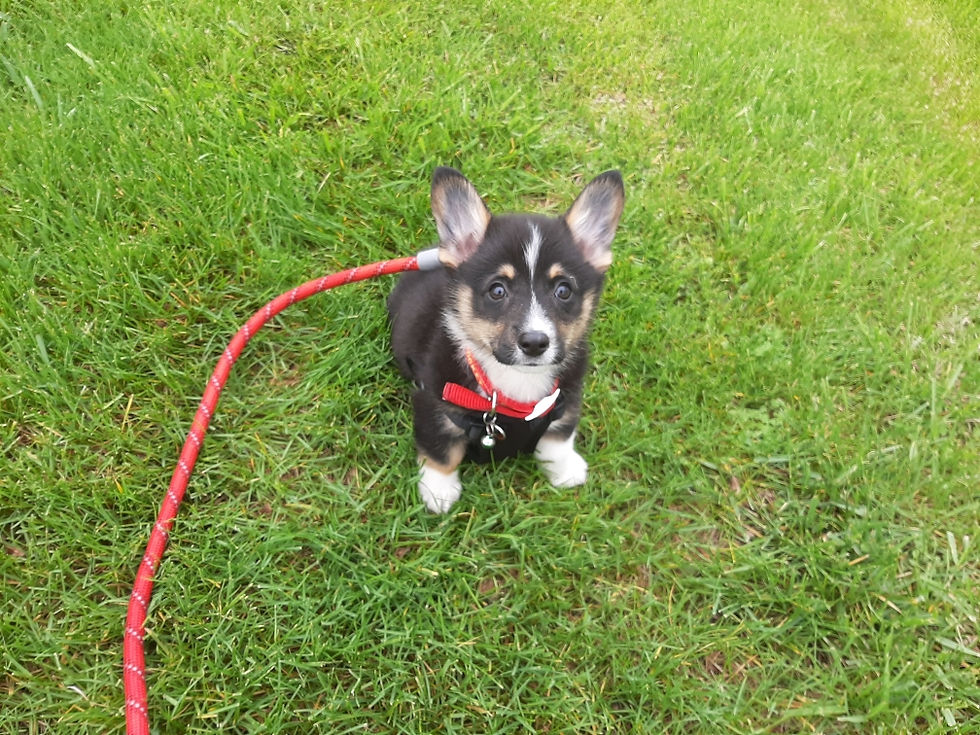
For these walks I would recommend using a harness and a 10 foot leash; as you walk with your puppy you’ll let the leash out if your puppy gets a little ahead of you, then reel the leash in as you catch up to your puppy. Keep both hands on the leash to make this simple for you to do.
If you live in an area with no sidewalks or very narrow parkways you may want to only use a 6 or 8 foot leash, but I almost never recommend using a leash that is shorter than 6 feet. Remember: the shorter the leash, the smaller the margin of error is for your dog, and the more likely they are to pull and learn that pulling gets them places faster!
If your puppy sits down and wants to start watching the neighbor unload their groceries, or the kids playing at the park 50 feet away, let them. Don’t try to prompt them closer and force them to interact, or make them get up and keep walking. So much is learned just by letting your puppy observe and watch the world. If your puppy seems overwhelmed or upset, sit with them, pet them, and give them treats if they seem interested. Don't worry about "reinforcing" fear, it's important that your puppy knows you are there with them.
The more that we allow our puppy to observe the world and “take it all in” the more regulated and confident they will be as adult dogs!

A quick side note: if you have another adult dog at home and that dog has any bad habits on the walk (I.e. if they bark and lunge at other dogs, if they chase cars or trucks, if they pull horrendously on the leash) I highly, HIGHLY recommend you don’t walk your puppy with your older dog until you’ve either established walking rules with your puppy for at least several months if not the entire first year of their life, OR you have worked on your other dog’s behavior and made some improvements. My older dog, Regis, had a history of reactivity on leash when I first brought Phoebe home as a puppy, so they got walked completely separately until Phoebe was about 8 or 9 months old! But this way I got to keep working on Regis' behavior on leash, and I set a clear precedent for Phoebe of how walks would be! I really didn't want Phoebe to see Regis bark and lunge at things on the walks and thing that she should do that too, so I didn't even risk it!
If you are on a time “crunch” and can’t let your puppy take their sweet time on the walk then I’d recommend just a quick potty break in the yard and some short playtime, instead of trying to “go for a walk”. As your puppy matures into adolescence (again, around that 20 week mark) their bodies will grow quickly and they’ll be able to start taking “real” walks with you where you go around the block, to the park, 1/4 mile, etc. But until then, letting them go at their own pace and putter along is critical!
One more note: if you are attempting to take your puppy for walks and they are showing signs of extreme fear (I.e. tail tucking, ears pinning, pulling desperately to get home or get away from the things that they see, uninterested in even high value food whenever they’re out of the house) that is not trending better over time please, please hire a trainer to work with you as soon as you can. Many puppies will habituate to things that cause them mild stress out on walks, but puppies who display the body language listed above and who are unable to recover from the stress until they get home tend to need more help, and the younger you get that help the better as your puppy will still be within their critical window of socialization! So, if you have a new puppy: get out there, let them explore, but go at THEIR pace. Puppy led walks will foster confidence and resilience, which will lead to better walks for the entirety of your puppy’s life!


Comments